Should You Use Parchment Paper on a Pizza Stone?
No, absolutely not. It prevents the pizza stone from doing its job properly.
A crispy crust and the topping of your choice. Is there anything better than making your own deliciously thin, crispy pizza? With this easy recipe you can make endless variations! I have included a lot of tips below for you to get everything just right. Still have questions? Let me know in the comments!

I make this homemade pizza dough recipe all the time, and for good reason. It’s simple, reliable, and delivers a deliciously crispy crust every single time.

For making homemade pizza, you really only need a few basic ingredients to get started. I will also give you plenty of options for the toppings, as that is where the real magic happens. Make sure to check the exact ingredients and quantities in the recipe card below.
Pizza is always a hit in our house, especially pizzas with a thin, crispy crust. With that goal in mind, I set out to create the best pizza dough possible without making things overly complicated. This easy pizza dough recipe is one you’ll definitely want to keep in your collection.
In this article, you’ll find all my tips for making the best homemade pizza dough and baking the most delicious pizza. With this recipe, anyone can make their favorite pizza!
The main ingredient in pizza dough is flour. Italians have a clear favorite: 00 flour.
This flour is made from soft wheat and is very finely milled, resulting in an elastic dough. According to Italians, it creates the perfect balance of strength and texture in the pizza crust.
Personally, I don’t usually buy specialty flour just for pizza dough. Instead, I use the closest alternative that’s widely available: all-purpose flour. If you can find pizza flour, that’s even better.
BAKING TIP: If you love crispy pizza as much as I do, bake your homemade pizza on a pizza stone. It mimics the effect of a traditional Italian stone oven and gives the crust extra crispiness.

I make no secret of my love for pizza, and I enjoy making my own pizzas at home. The best part is that you’re completely in charge of the toppings. No one at home will judge you if you load your pizza with pineapple. 😉
Here are some delicious toppings for your pizza crust and tomato sauce before it goes into the oven:
Some ingredients are best added after baking, such as:
The golden rule of pizza making is: less is more.
Don’t overload your pizza with toppings. Stick to a few carefully chosen ingredients. Go easy on the tomato sauce as well, since too much can result in a soggy crust. The same goes for mozzarella. Choose a firm variety that doesn’t release too much moisture while baking.
Since I started making my own pizza dough and crusts, I’ve tried countless delicious combinations. I will be posting more pizza recipes soon, but for now you can enjoy these pizza flavored recipes as well:

These days, I make my own pizza dough all the time and have practiced with this recipe many times. I love being able to decide exactly how thin or thick I roll out the dough. With the tips below, you’ll be baking the perfect pizza crust at home too.
Simply combine all ingredients and knead them into a dough.
You can do this by hand, but I usually use my stand mixer. Knead for about 10-15 minutes, then continue briefly by hand until you can stretch a small piece of dough into a thin membrane.
The dough should stretch without tearing, almost like a piece of chewing gum.
Many chefs recommend letting pizza dough rest and rise overnight in the refrigerator. I usually skip this because I’m eager to start making pizza right away.
If you’d like to do this, place the dough in the refrigerator immediately after kneading. It will continue rising until the dough reaches approximately 45°F (7°C), at which point the yeast activity slows dramatically.
When you remove the dough from the refrigerator, it will continue rising. Overall, the dough should still double in size as stated in the recipe.
Want to shape your pizza dough the traditional Italian way?
Generously flour your work surface and gently flatten the dough. Turn it over and use your fingertips to stretch it from the center outward toward the edges.
Rotate the dough between your hands as you work until you’ve reached the desired size.
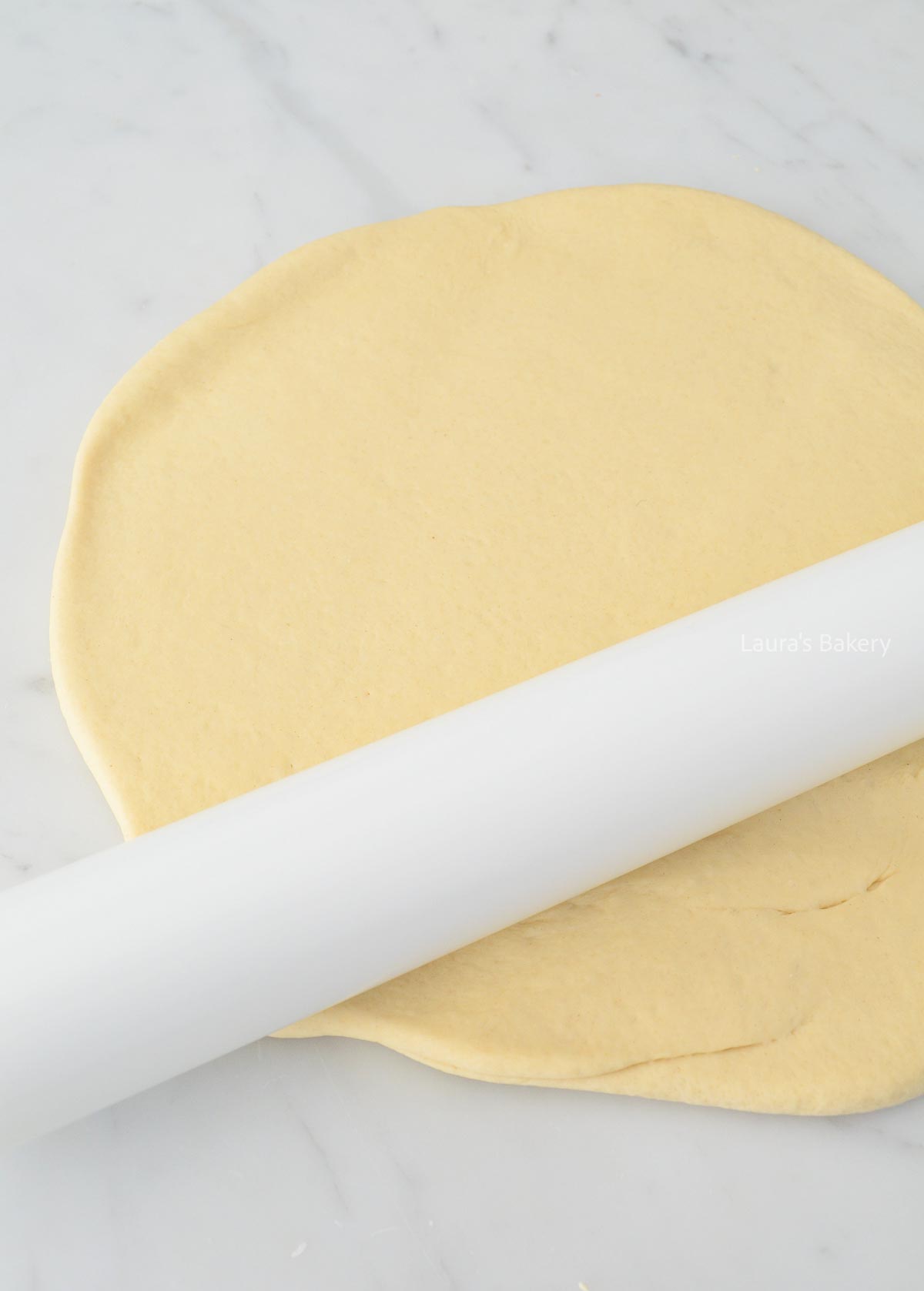
Italian pizza makers would never use a rolling pin, but I certainly do.
For me, it’s the easiest and most reliable method, although I’d still love to master the traditional technique someday.

Once your pizza is rolled out and topped, it should go straight into a preheated, hot oven.
A true pizza oven operates between 575–660°F (300–350°C), but most home ovens don’t get nearly that hot.
I bake my pizzas using conventional heat (top and bottom heat), ideally on a pizza stone. The stone absorbs and radiates heat, creating an effect similar to a traditional stone oven.
The result is an extra crispy crust.
Never place parchment paper on the pizza stone.
The thicker the stone, the longer it takes to heat up.
Once fully heated, you can bake several pizzas in a row.
If you’re using a convection oven, turn off the fan if possible. And remember: the hotter the oven, the faster your pizza will bake. At 575°F (300°C), a thin pizza with minimal toppings can be done in as little as 5 minutes.
Planning a pizza party? This dough is perfect for making ahead of time. That way, you can focus on toppings and baking when it’s time to serve.
Stored in an airtight container, pizza dough will keep in the refrigerator for up to 2 days.
Absolutely.
The most important thing is to freeze it after it has risen. Once the dough has doubled in size, divide it into portions and shape them into dough balls.
Dust lightly with flour and wrap each dough ball tightly in plastic wrap. I also like to place the wrapped dough in a freezer-safe container.
Frozen pizza dough will keep for up to 3 months.
To thaw, place it in the refrigerator overnight or leave it at room temperature until fully defrosted.
Another convenient option is to assemble and partially bake the pizzas for about 10 minutes.
Let them cool completely, wrap them airtight, and freeze for up to 3 months.
When you’re ready to eat, bake them straight from frozen for 10-15 minutes until golden brown and crispy.
No, absolutely not. It prevents the pizza stone from doing its job properly.
No. The dough really needs the time specified in the recipe.
You can make it a day ahead and let it rise overnight in the refrigerator if that works better for your schedule.
Yes. Wrap them airtight and place a sheet of parchment paper between each crust so they don’t stick together.
Absolutely. Pizza works surprisingly well in an air fryer.
Links in this article may be affiliate links. If you purchase something through such a link, I will receive a small commission, without you paying anything extra.

Welcome to Laura’s Bakery! You’ve come to the right place for the most delicious baked goods and appetizers. With my easy recipes for home bakers I will show you that baking is fun and delicious.
Have fun baking!