
How many tarts does this recipe make?
You’ll get about 18 tarts total; 12 from the first puff pastry roll and 6 from the second. If you use both full rolls, you can make 24 smaller tarts. Or make a bit more custard filling.
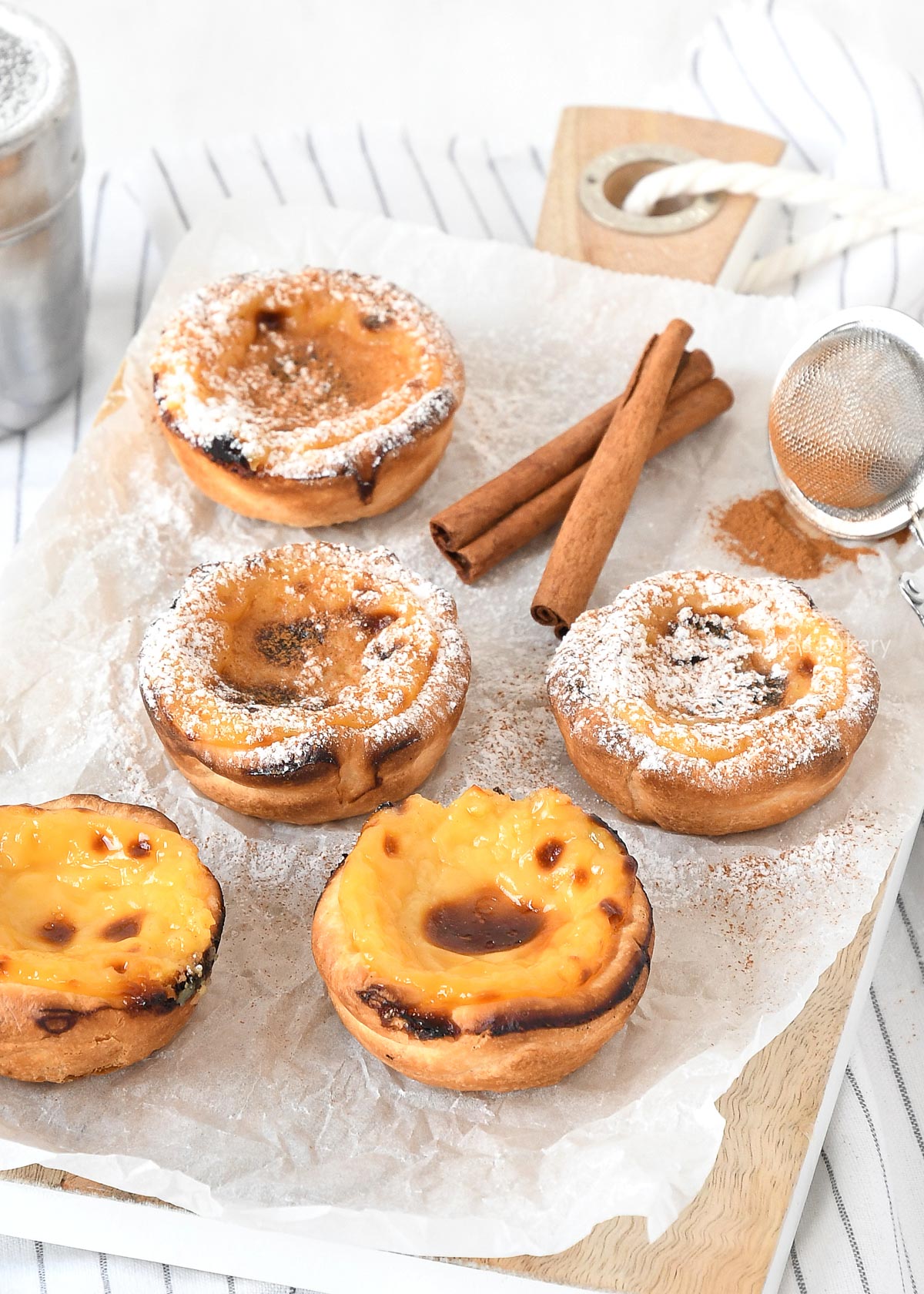
Crispy pastry cradling a silky, caramel-kissed custard with a perfect wobble is what these pastéis de nata are all about! And today, I’m going to show you how to make them from the comfort of your kitchen. Once you try them, you’ll understand the obsession.

These pastéis de nata deliver that authentic bakery experience straight from your own oven.
This recipe keeps things simple. I use puff pastry for the crust, while a stovetop custard comes together with milk, sugar, eggs, and a few aromatic extras. No complicated dough-folding, no hours of chilling. Make sure to check the recipe card below for full details.
You’ll also need a 12-cup muffin tin, butter or baking spray for greasing, and a sugar thermometer for best results.
In a medium bowl, whisk the flour with 50 ml/1.7 floz. of the milk until you have a smooth, lump-free paste. Set aside.
Combine the sugar, cinnamon stick, lemon zest, and water in a saucepan. Give the pan a gentle swirl to moisten all the sugar, then place it over medium heat. Heat to 100-105°C/ 212-221°F on a sugar thermometer.
Do not stir, just swirl the pan occasionally. This prevents crystallization and keeps your syrup clear.
While the syrup is heating, warm the remaining 250 ml/ 8.5 floz. of milk in another saucepan until it’s almost boiling. Remove from heat and slowly pour it into the flour mixture, whisking constantly until smooth.
Once your sugar syrup hits the right temperature, carefully take out the cinnamon stick and lemon strips. Slowly pour the hot syrup into the milk-flour mixture while whisking continuously.
Add the vanilla and stir well. Let this mixture sit and cool slightly. It should be warm but no longer scalding to the touch.
Whisk the egg yolks into the cooled custard mixture until fully incorporated. Cover the bowl with foil and set aside while you prepare the pastry.
Preheat your oven to 280°C /536°F (conventional oven) and position a rack high in the oven. This high heat is non-negotiable for authentic results!
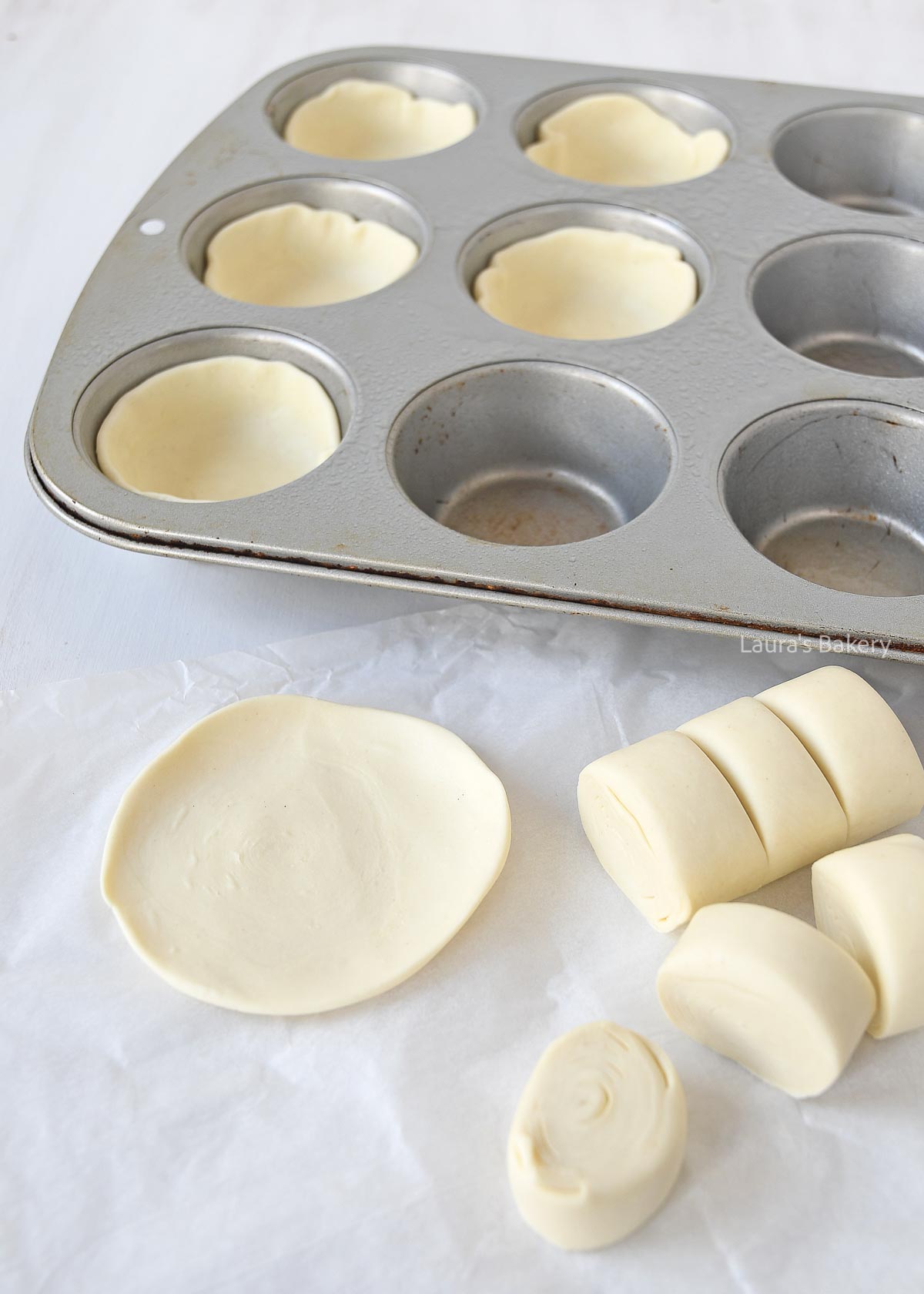
Roll out one sheet of puff pastry completely flat. Roll it back up into a tight log, then slice that log into 12 equal rounds. For the second sheet, you’ll only need half. Halve it lengthwise, roll each strip up, and cut into 3 pieces per strip (6 total). Keep the remaining half-sheet refrigerated for another use.
Grease your muffin tin generously with butter or baking spray. Roll each pastry round as thin as you can (think paper-thin) and press them into the muffin cups.
Press the dough up the sides as high as possible; they don’t need to reach the very top, but the higher they go, the more custard they’ll hold. Prick the bottoms with a fork to prevent puffing.
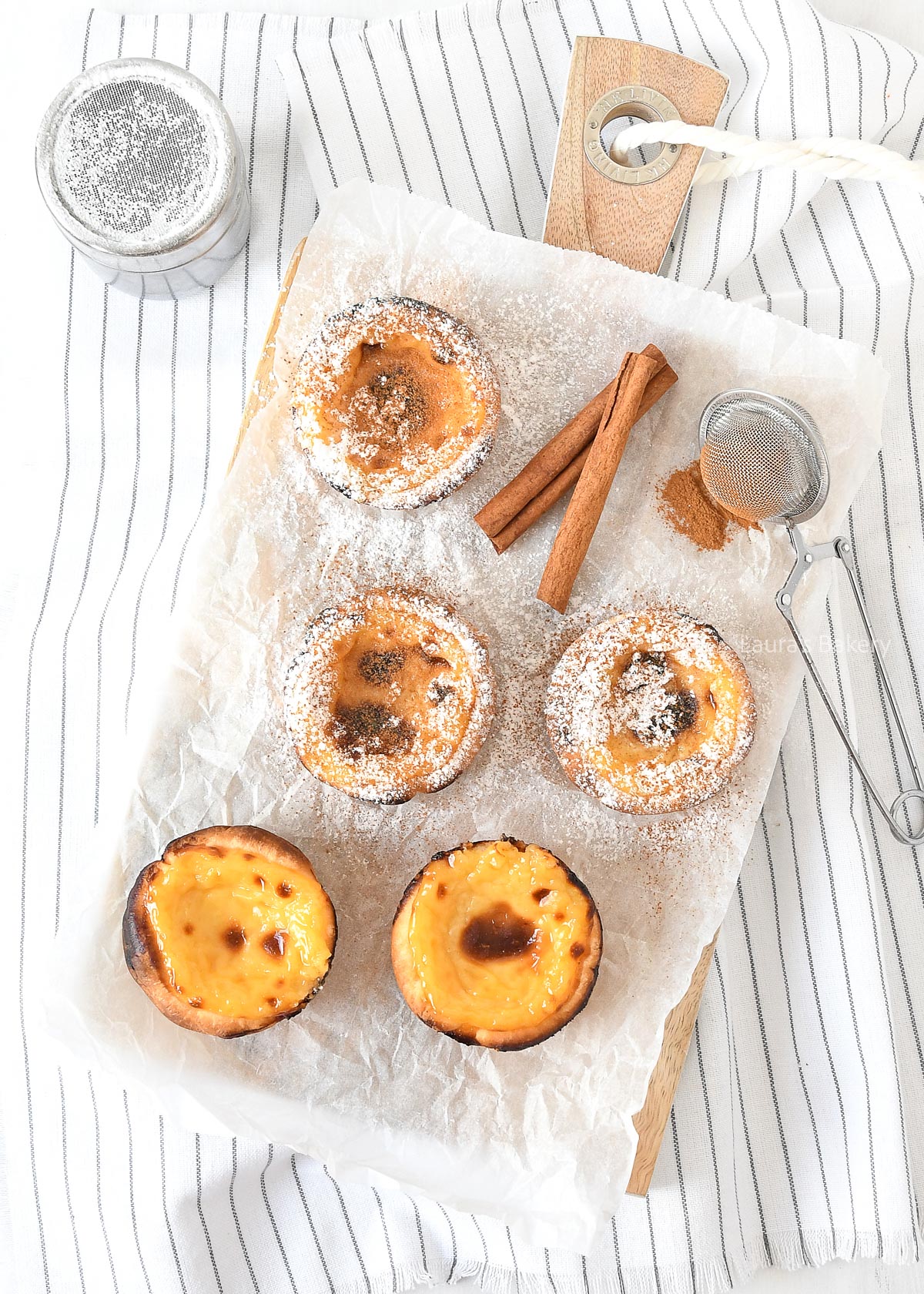
Give your custard a final whisk, then fill each pastry shell about three-quarters full. Don’t overfill; the custard will puff slightly as it bakes.
Bake for 10-15 minutes at 280°C /536°F (conventional oven). Watch them closely from the 10-minute mark as they go from pale to perfectly golden in seconds!
You’re looking for deep golden-brown tops with attractive dark blisters (those are flavor spots, not burns). If your oven runs hot, start checking at 8 minutes.
PRO TIP: If your oven maxes out below 280°C /536°F, bake at the highest temperature possible. They’ll take a little longer and won’t blister quite as dramatically, but they’ll still be delicious.
Let the tarts rest in the pan for 5 minutes which will help them release cleanly, then transfer to a wire rack. Repeat with the second batch using your remaining pastry and custard.
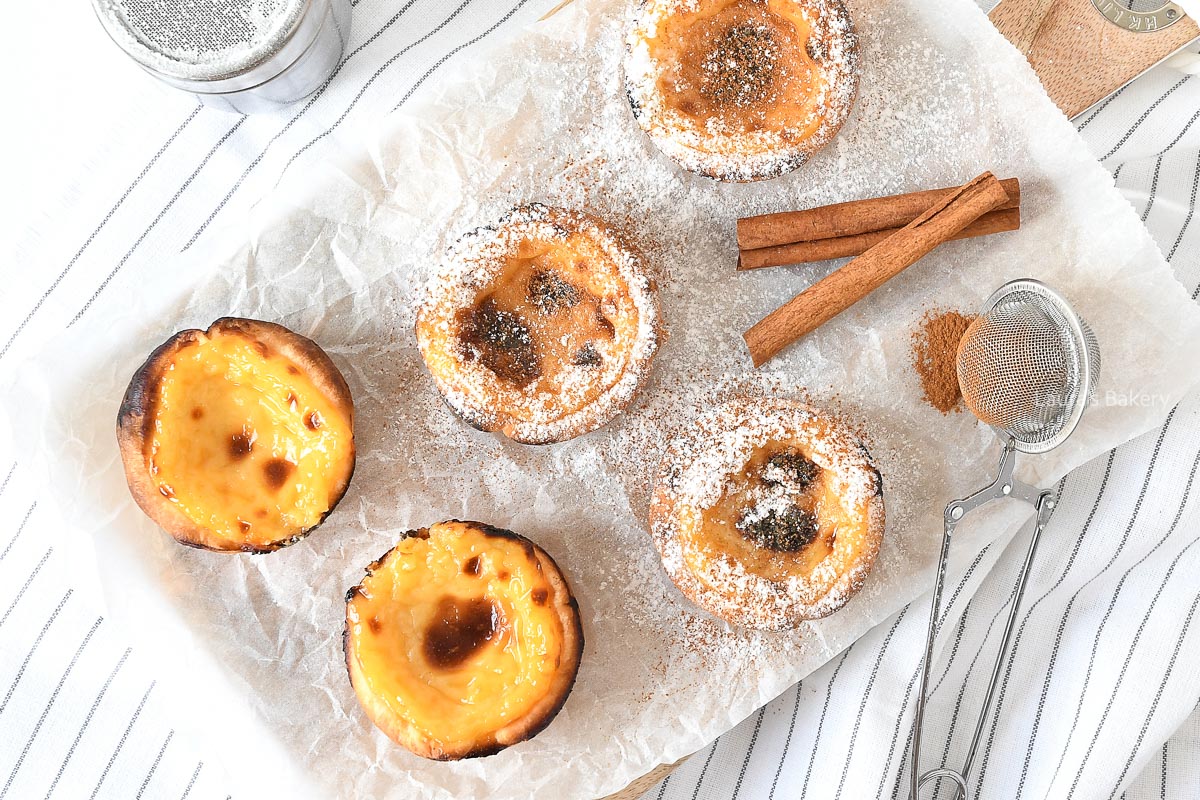
Dust generously with powdered sugar and a sprinkle of cinnamon just before serving. Enjoy them warm for maximum crunch, or at room temperature. They’re wonderful either way!
These tarts are at their absolute best on the day they’re baked, when the pastry is crisp and the custard is perfectly set. Store leftovers in an airtight container at room temperature for up to 2 days. The pastry will soften, but the flavor remains lovely.
I don’t recommend reheating, as the custard will continue to cook and become rubbery.
If you aren’t sure what to do with your leftover egg whites, don’t throw them away! They are ideal for making an array of other delicious sweet recipes, such as cookies, frostings and fillings, and more.
You’ll get about 18 tarts total; 12 from the first puff pastry roll and 6 from the second. If you use both full rolls, you can make 24 smaller tarts. Or make a bit more custard filling.
This is almost always a temperature issue. The sugar syrup must reach 100-105°C/212-221°F before you add it to the milk mixture. Without that heat, the custard won’t thicken properly. Also, make sure your oven is hot enough as the high heat helps set the custard from the bottom up.
Yes, for consistent results. The syrup needs to hit a precise temperature range, and guessing just doesn’t work. A thermometer takes all the guesswork out and guarantees success.
Puff pastry is a convenient shortcut (especially store-bought) and works wonderfully. If you’re feeling ambitious, you can make traditional Portuguese pastry dough (massa folhada) from scratch which yields an even thinner, more delicate shell.
Pricking the bottom with a fork is essential as it lets steam escape so the pastry stays flat. Also, make sure your pastry is well-chilled before baking; warm pastry tends to shrink. If your kitchen is hot, pop the lined muffin tin in the fridge for 10 minutes before filling.
Oh, the possibilities! Whip them into meringues, fold them into an Spanish tortilla, freeze them for later, or use them to make macarons, angel food cake, or a simple pavlova. They keep in the freezer for months.
‘Pastéis’ translates to ‘small cakes’, while in the singular it refers to a ‘pastel’. ‘Nata’ means cream, so these treats are essentially Portuguese cream tarts.
I don’t recommend reheating them for too long or at a high temperature to crisp up the pastry, as the custard will continue to cook and become firmer.
Links in this article may be affiliate links. If you purchase something through such a link, I will receive a small commission, without you paying anything extra.

Welcome to Laura’s Bakery! You’ve come to the right place for the most delicious baked goods and appetizers. With my easy recipes for home bakers I will show you that baking is fun and delicious.
Have fun baking!