Can I replace the rice flour with another type of flour?
You can use a gluten-free all-purpose flour blend, or you could try buckwheat flour. Either can be used as a 1:1 substitute for the rice flour.
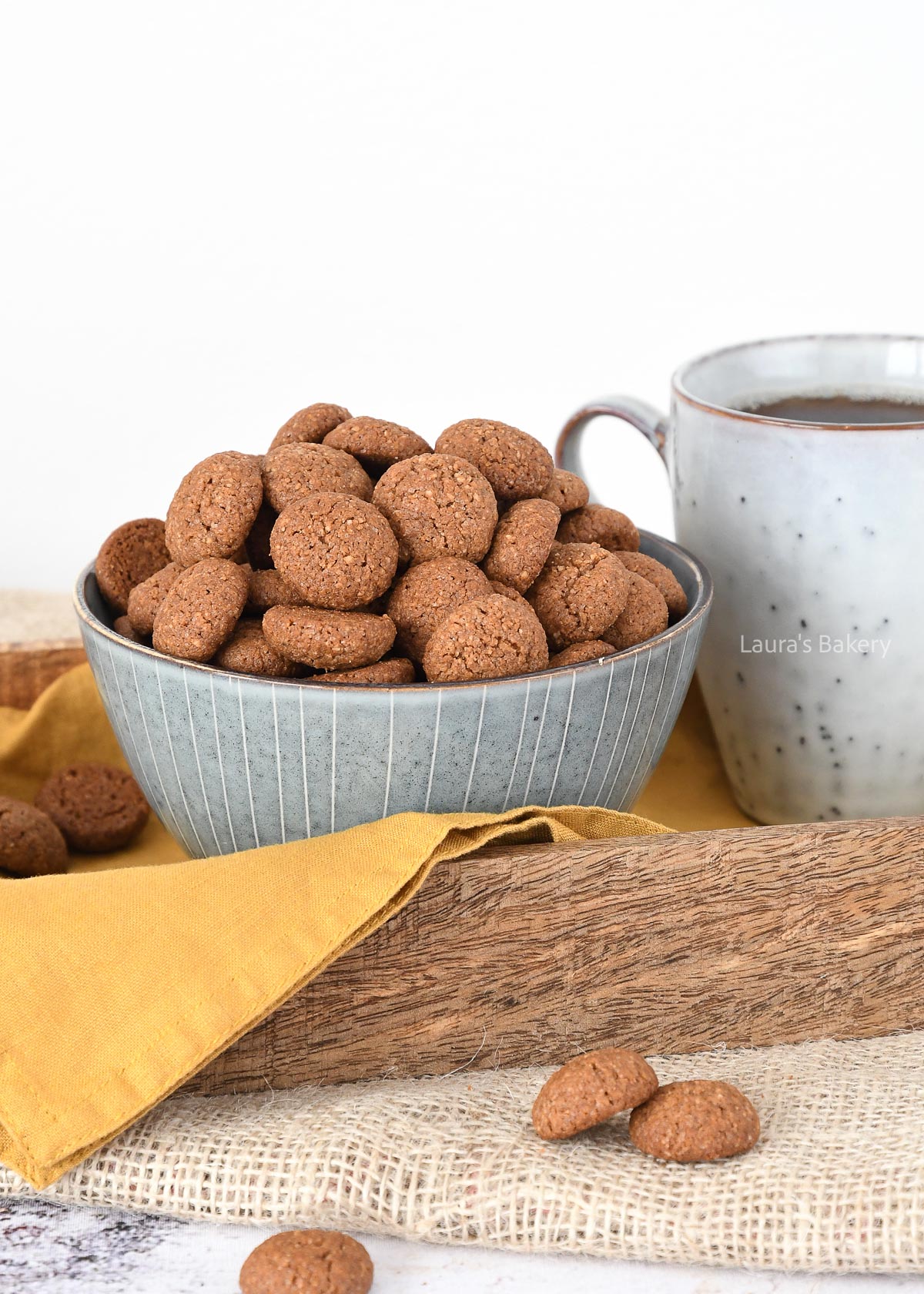
These gluten-free Dutch spiced cookies (kruidnoten) are absolutely irresistible. The recipe is very easy to make from scratch, and the result is incredibly delicious. Happy baking!

My recipe for Dutch spiced cookies is quite popular around the festive season, so I figured I’ll share this equally good gluten-free kruidnoten recipe. I tend to call these little cookies pepernoten (pepper nuts) but the official name is kruidnoten. I’ll explain the difference between the two below.
Making these gluten-free kruidnoten is not very difficult but let me give you the needed ingredients. As always, double-check the exact ingredients and quantities in the recipe card below.
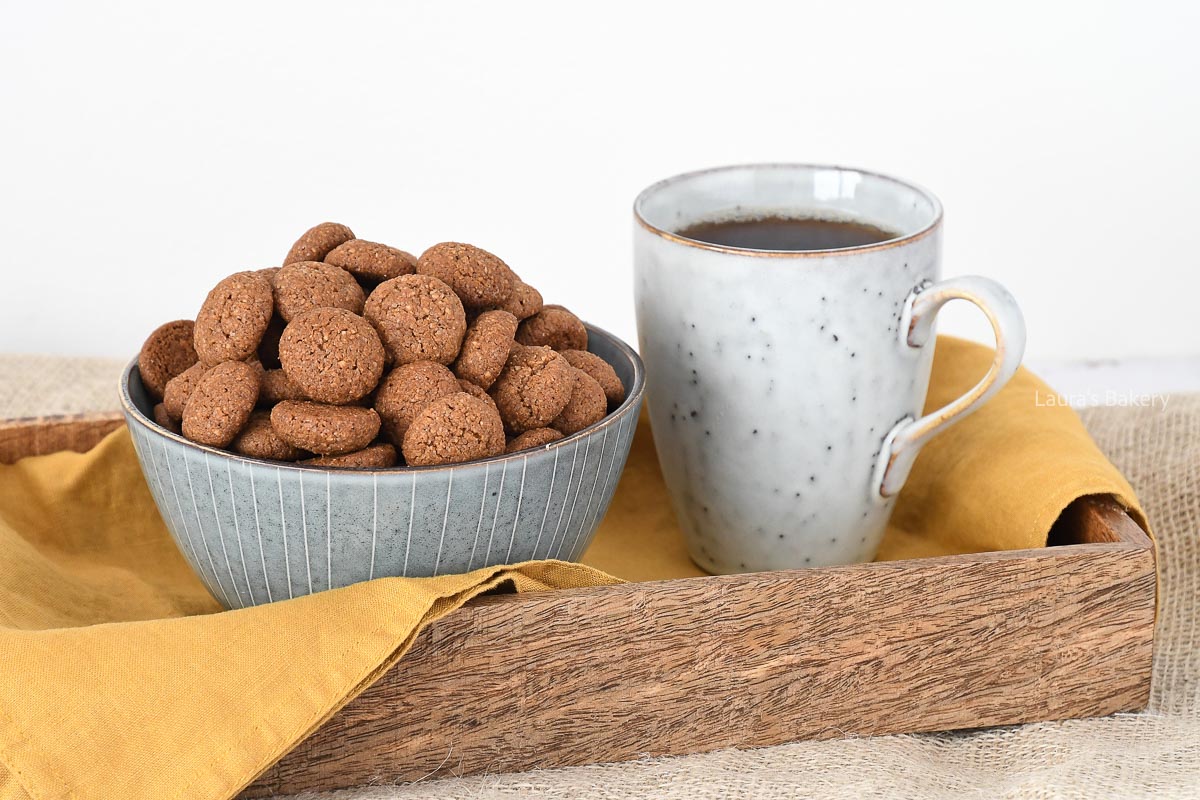
To make kruidnoten gluten-free, I decided to use a combination of rice flour and almond flour. Rice flour is often used as a good gluten-free substitute for regular flour, but adding almond flour makes this recipe even more delicious. Its flavor is a perfect match for these cookies.
The recipe itself is really super easy. Place all the ingredients in a bowl and knead until a firm dough forms. Wrap the dough and refrigerate for at least 1 hour. The longer you let it rest, the better, as this gives the flavors more time to develop. Check here why chilling your dough is always a good idea.
Use a large baking sheet lined with parchment paper and roll the dough into small balls. The size should be roughly equal to a small marble and ideally you’ll want them to be equally sized. Keep some space in between the little balls as they will spread a little bit.
Bake the gluten-free spiced cookies for 10-15 minutes at 340°F/170°C (conventional oven).
Let them cool briefly on the baking sheet before transferring them to a wire rack.
BAKING TIP: I store my homemade speculaas spice blend in spice jars or small airtight jars that seal well.
You can store these in an airtight container or in a cookie jar for 2-3 weeks.
Yes they freeze very well and can be kept for up to three months in the freezer.
Of course the recipes below (some of them) can easily be replaced with gluten-free kruidnoten.
I’m one of those people who calls what are officially known as “kruidnoten” pepernoten. And I’m pretty sure I’m not the only one. But I really do know the difference between these two traditional Sinterklaas treats, even though real pepernoten aren’t handed out nearly as often anymore because kruidnoten have become so popular.
It’s actually quite fun to take a closer look at the differences. So what exactly is a pepernoot, and what is a kruidnoot? Here’s the short version:
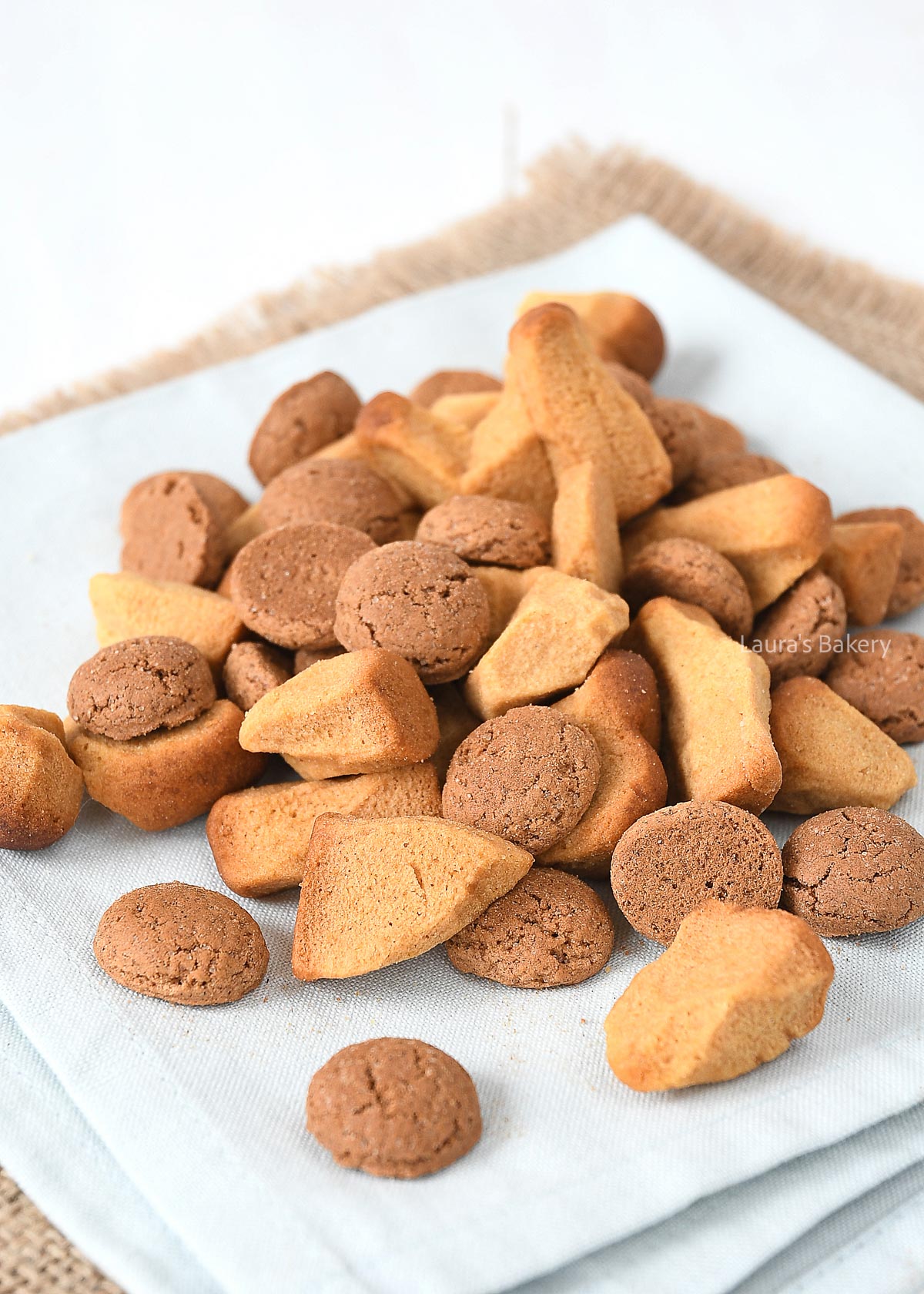
The main differences are in the flavor, texture, and appearance. Pepernoten are flavored only with ground anise (and no pepper, despite what the name might suggest) and have a softer, chewier texture, similar to taaitaai (another famous Dutch recipe). Apparently, pepernoten used to have the same shape as kruidnoten, but today they look more like irregular little cubes.
Pepernoten really aren’t my thing. I still remember how disappointed I was when one of Sinterklaas’s helpers left real pepernoten at our house. Give me kruidnoten any day! Even though many people, myself included, simply call them pepernoten.
Kruidnoten are crisp and crunchy, shaped like little domes, and packed with warm spices thanks to the rich speculaas spice blend mixed into the dough. Pretty clear differences, right? In the photo above, you can see that they’re not easy to confuse based on appearance alone.
You can use a gluten-free all-purpose flour blend, or you could try buckwheat flour. Either can be used as a 1:1 substitute for the rice flour.
Other readers have already tested this, and yes, you can! Replace the almond flour and rice flour with a total of 220 grams/7.7 oz of gluten-free all-purpose flour blend. Personally, I think the almond flour adds extra flavor to these kruidnoten, but the recipe works well without it too.
Just check whether your gluten-free flour blend already contains a leavening agent. If it does, you may not need the baking powder listed in the recipe below.
I haven’t tested a vegan version, but I do know that you can easily replace the butter with a plant-based version.
Links in this article may be affiliate links. If you purchase something through such a link, I will receive a small commission, without you paying anything extra.

Welcome to Laura’s Bakery! You’ve come to the right place for the most delicious baked goods and appetizers. With my easy recipes for home bakers I will show you that baking is fun and delicious.
Have fun baking!