
Can I use regular all-purpose flour instead of self-rising flour?
Yes, you can. If using all-purpose flour, check how to substitute in this article on self-rising flour.
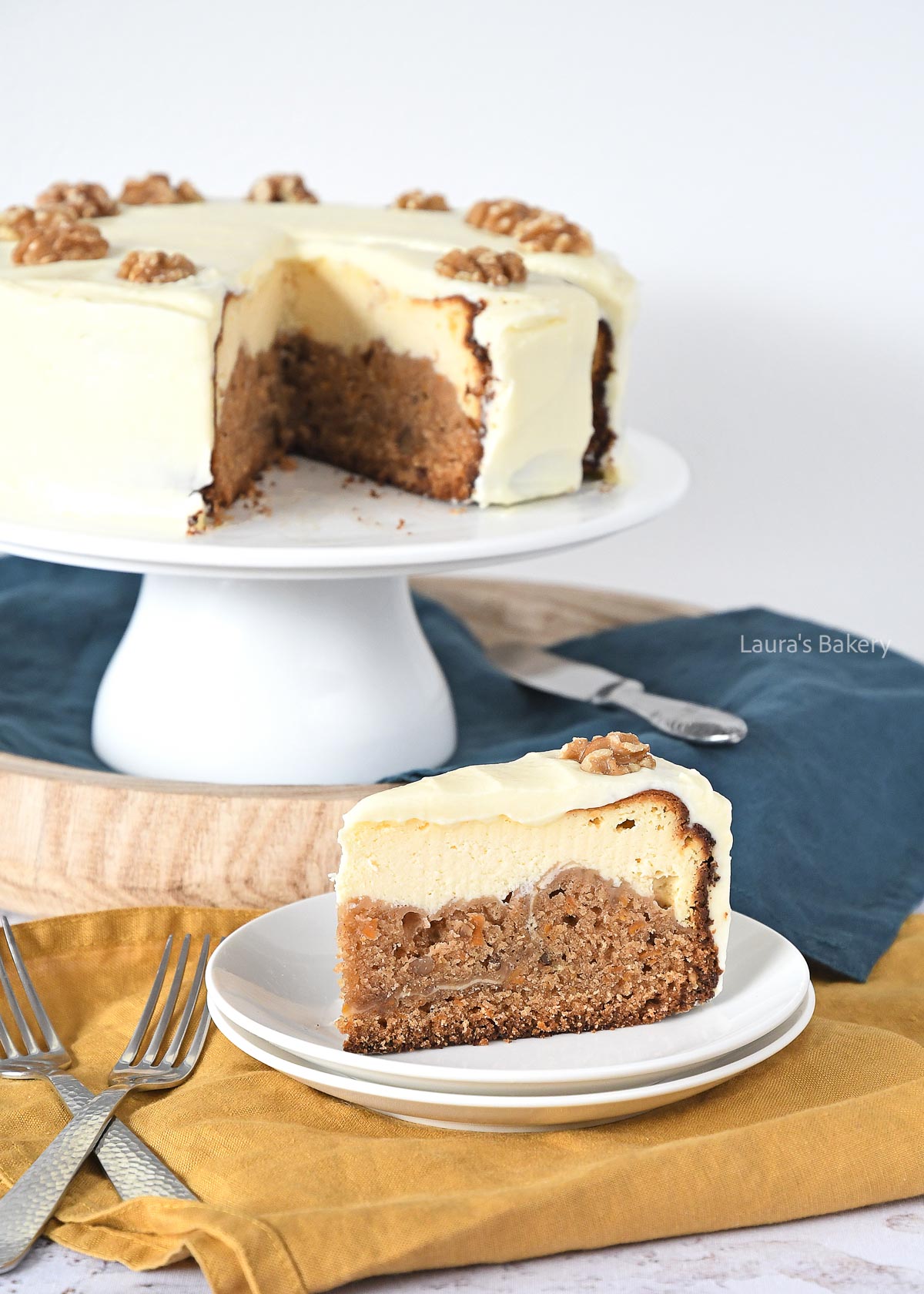
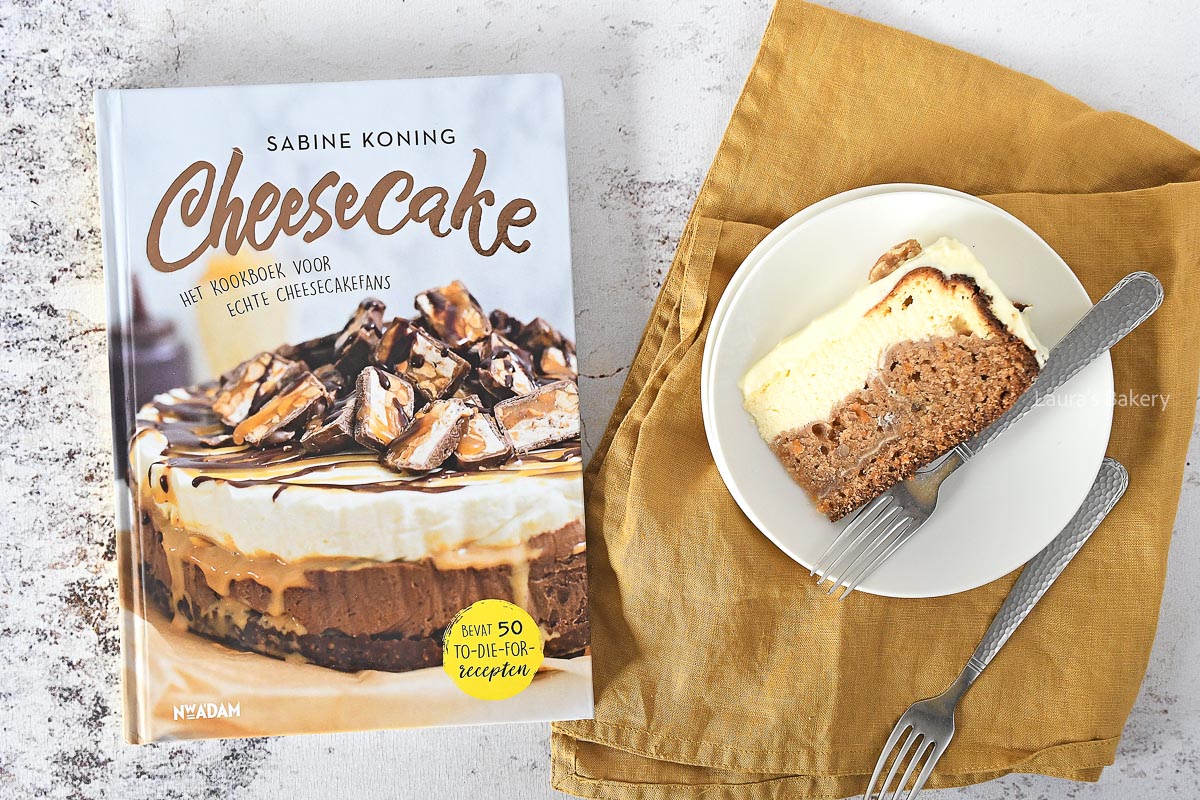
Cheesecakes. I love them! This carrot cake cheesecake is based on a recipe out of the book of one of my Dutch blogging friends: Ohmyfoodness.
I made just a few minor adjustments to the recipe as I thought walnuts are something that is essential in a carrot cake. I also change the cream cheese frosting a little bit so it would be firmer.
If you love cheesecake and you love carrot cake (like my favorite carrot cake recipe!) than this is the best of both worlds. A delicious carrot cake layer topped with a creamy cheesecake layer… Do I need to say more?
Make sure to double check full ingredients and quantities in the recipe card below.
For the carrot cake recipe you simply add all the ingredients into a large bowl. Mix until you have a thick batter and set aside.
To make the second layer, you add cream cheese and sugar into the bowl of a stand mixer. Beat until smooth and add the eggs one at a time. Scrape down the sides of the bowl occasionally and as a last step mix in the sour cream, vanilla extract, and corn starch.
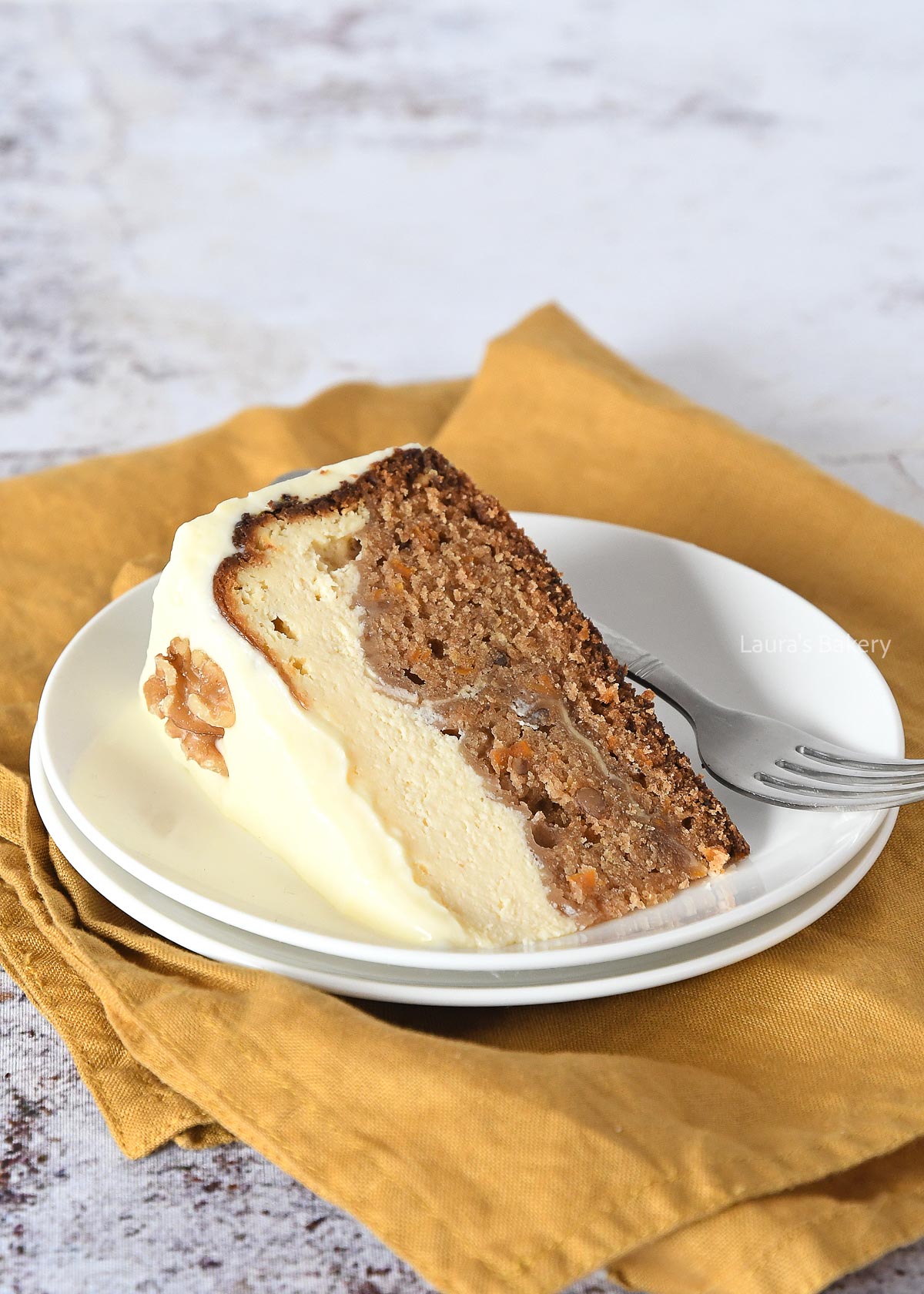
Line an 8-inch (20 cm) springform pan with parchment paper. Spread half of the carrot cake batter on the bottom of the form.
Add about 1/4 to 1/3 of the cheesecake batter into the center, but don’t spread it evenly. Top with the remaining carrot cake batter and finish with the rest of the cheesecake batter. For that last layer, spread it evenly over the top of the cake.
Now bake the cake for about 80 minutes at 180˚C/350˚F. Cover the top of the cheesecake about halfway through with aluminum foil so it doesn’t get too dark. After baking turn of the oven and – with the door slightly ajar, let it cool for at least an hour. Place in the refrigerator to set completely.
Of course this is an optional step, but the frosting really does make a difference! Spread it over the cake and decorate with walnuts.
Me too! I’m sure you will like these too:
Yes, you can. If using all-purpose flour, check how to substitute in this article on self-rising flour.
Definitely. Neutral oils like canola or vegetable oil work just as well. Avoid strongly flavored oils such as olive oil. Or check this article on which oils you can use for baking.
Yes. This step helps the cheesecake set properly, develop the right texture, and makes it easier to slice cleanly. Check the article on making the perfect cheesecake for an explanation.
Yes, but it’s best to freeze it without the cream cheese frosting. Wrap the cake tightly in plastic wrap and foil. It will keep in the freezer for up to 3 months.
Cracking often happens if the cheesecake bakes too quickly or cools too fast. To prevent this, avoid overmixing the batter, don’t skip the cooling step in the oven, and cover the cake with foil halfway through baking.
Adding a small oven dish of water in the oven for some steam works too!
Links in this article may be affiliate links. If you purchase something through such a link, I will receive a small commission, without you paying anything extra.

Welcome to Laura’s Bakery! You’ve come to the right place for the most delicious baked goods and appetizers. With my easy recipes for home bakers I will show you that baking is fun and delicious.
Have fun baking!