Can You Reuse Metal Lids?
Yes, as long as they’re in good condition. Check that they’re not warped and that the inside has no rust, damage, or peeling coating.
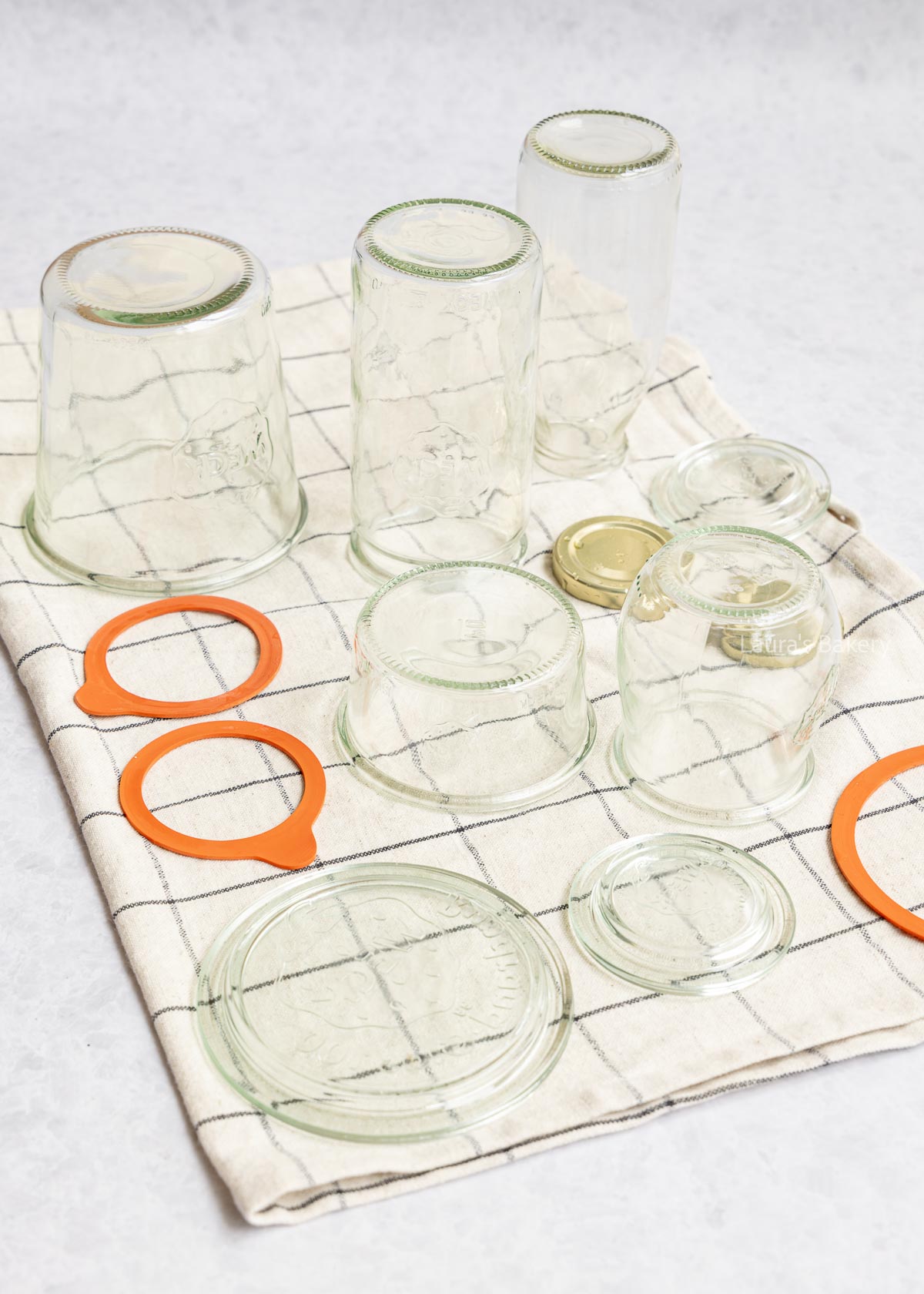
Making your own jam, storing sauces, or gifting homemade lemonade syrup? So much fun! But properly sterilizing your glass bottles and jars is essential. In this how-to guide, I’ll walk you through step by step why sterilizing matters and the different methods you can use.

Even if a bottle or jar looks clean, it can still contain bacteria. These micro-organisms can cause your homemade jam, syrup, or sauce to spoil more quickly. That’s why sterilizing is so important:
I prefer to sterilize jars or bottles right before using them, so I know no new bacteria have been introduced while they were sitting in the cupboard.
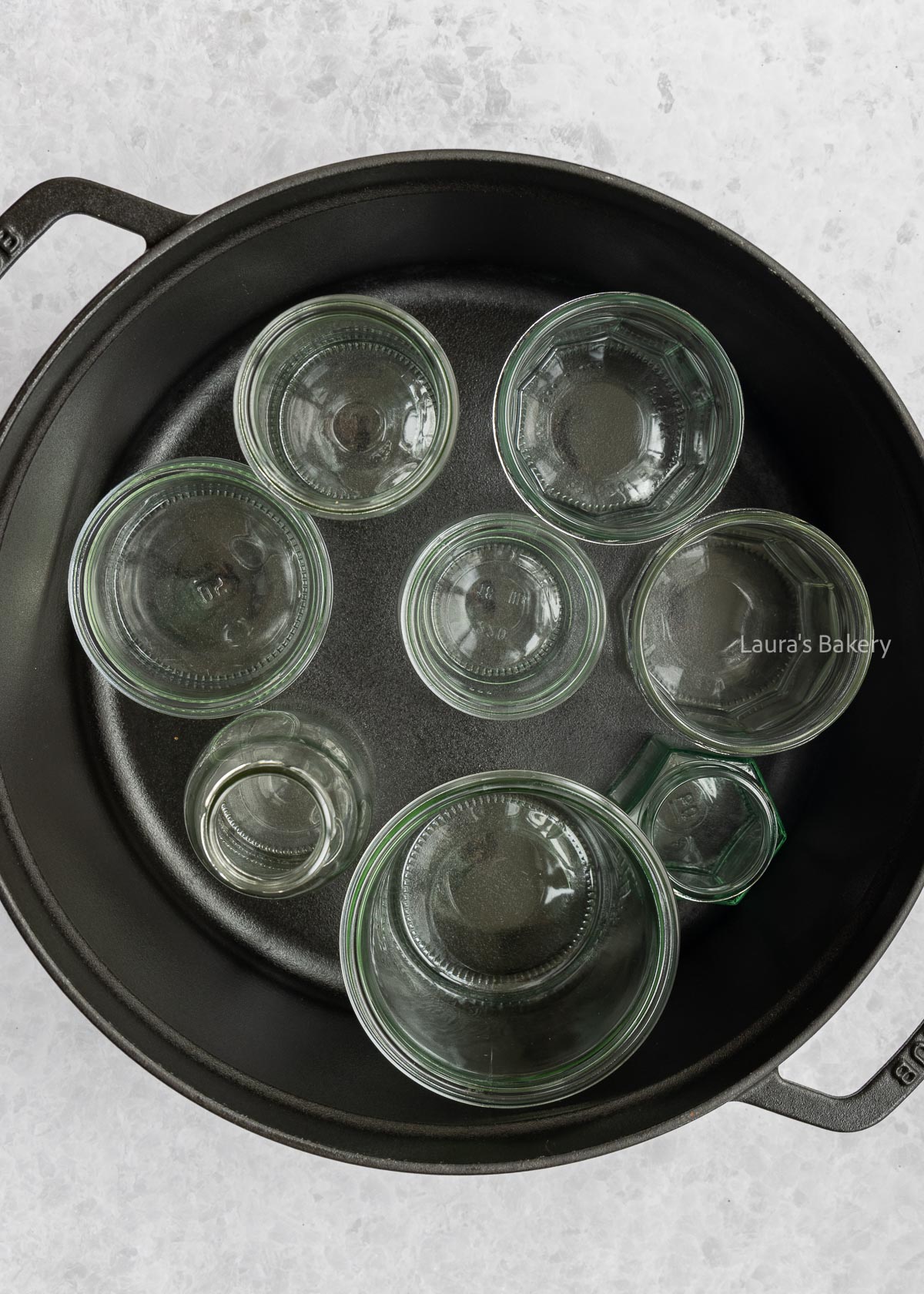
In theory, you can sterilize any heatproof glass jars and bottles. Reusing jars, like store-bought jam jars or pickle jars, works perfectly too. Just make sure they’re not damaged.
Looking for specific sizes? You can also buy new ones, such as:
Always check jars and bottles for small cracks, chips, or damaged rims. If they’re damaged, don’t use them, they can break during sterilization or let air (and bacteria) in later.
There are several safe ways to sterilize canning jars, jam jars, or glass bottles. The most common methods are:
Keep reading for step-by-step instructions for each method.
Metal lids and rubber seals should be treated separately. Place them in boiling water for 5-10 minutes and use them right away. Never put lids in the microwave or oven, this can damage them (and metal can damage your microwave).
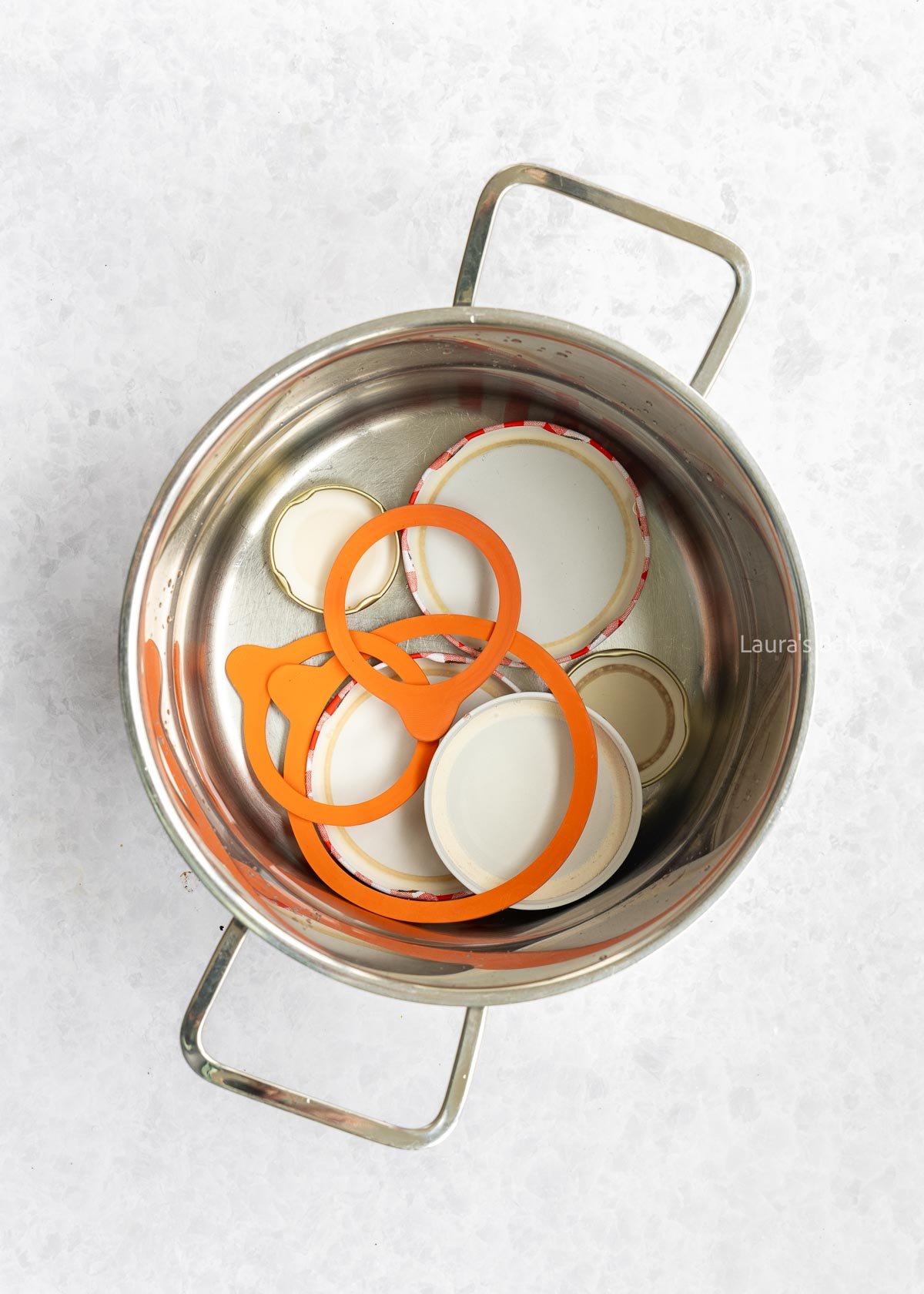
This is the classic, traditional method and the one I use most often for jam jars.
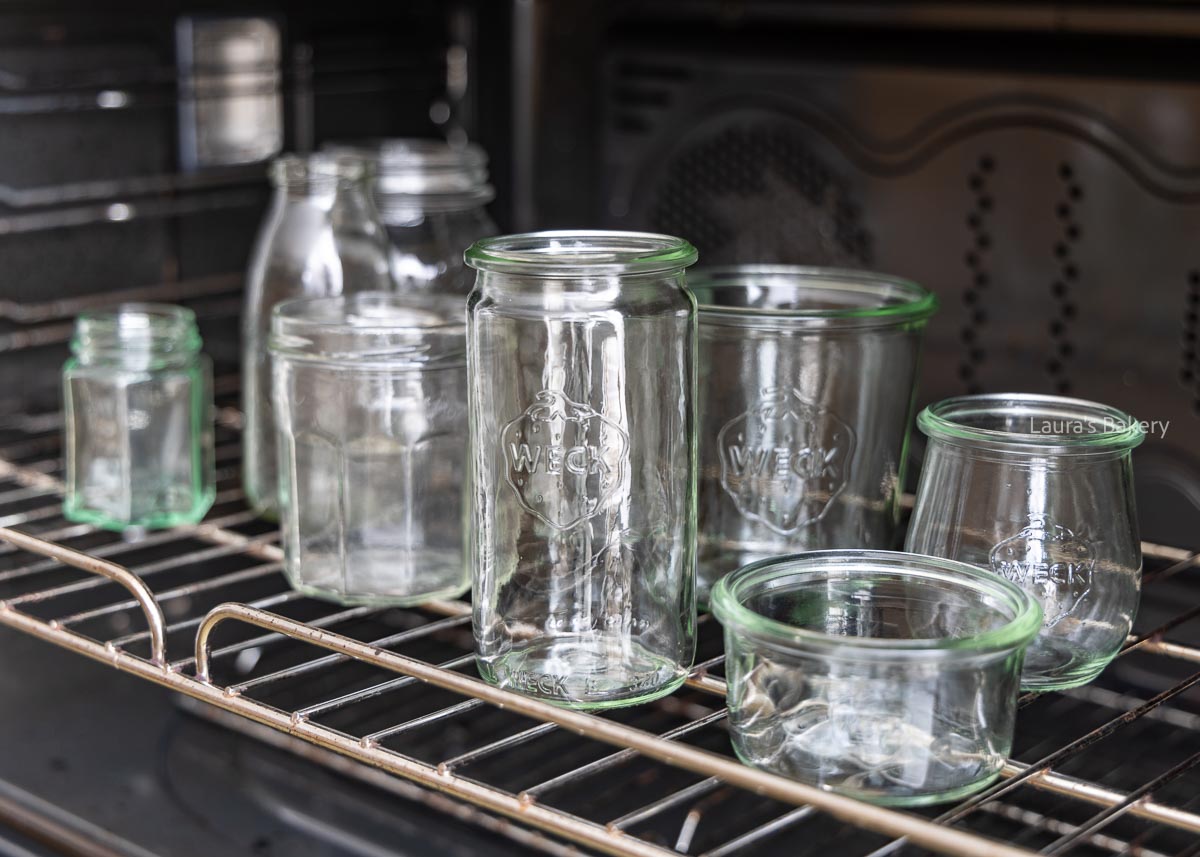
This is a handy method if you don’t have a large pot or want to sterilize many jars at once. Only suitable for glass, not for lids or rubber seals.
Great for small batches. Only suitable for glass, not for lids or rubber seals.
No. A dishwasher typically reaches a maximum of about 160°F/70°C, which isn’t hot enough to kill all bacteria. It’s great for cleaning but not for sterilizing.
Yes, as long as they’re in good condition. Check that they’re not warped and that the inside has no rust, damage, or peeling coating.
Store-bought metal lids are usually designed for one-time use when canning. After the first use, they may not seal as reliably. This also applies to lids with a built-in rubber ring.
If you want a proper vacuum seal for long-term storage, it’s best to use new lids.
It’s not required, but it’s recommended, preferably while they’re still warm. This helps prevent new bacteria from getting in and reduces the risk of temperature shock when filling.
No. Sterilizing requires high temperatures, and plastic lids usually can’t handle that, they may warp or melt.
There are countless recipes you can store in sterilized jars or bottles, such as:
Not only is it practical for your own pantry, but it also makes a wonderful homemade gift. In both cases, make sure to label your jars with the date and contents.
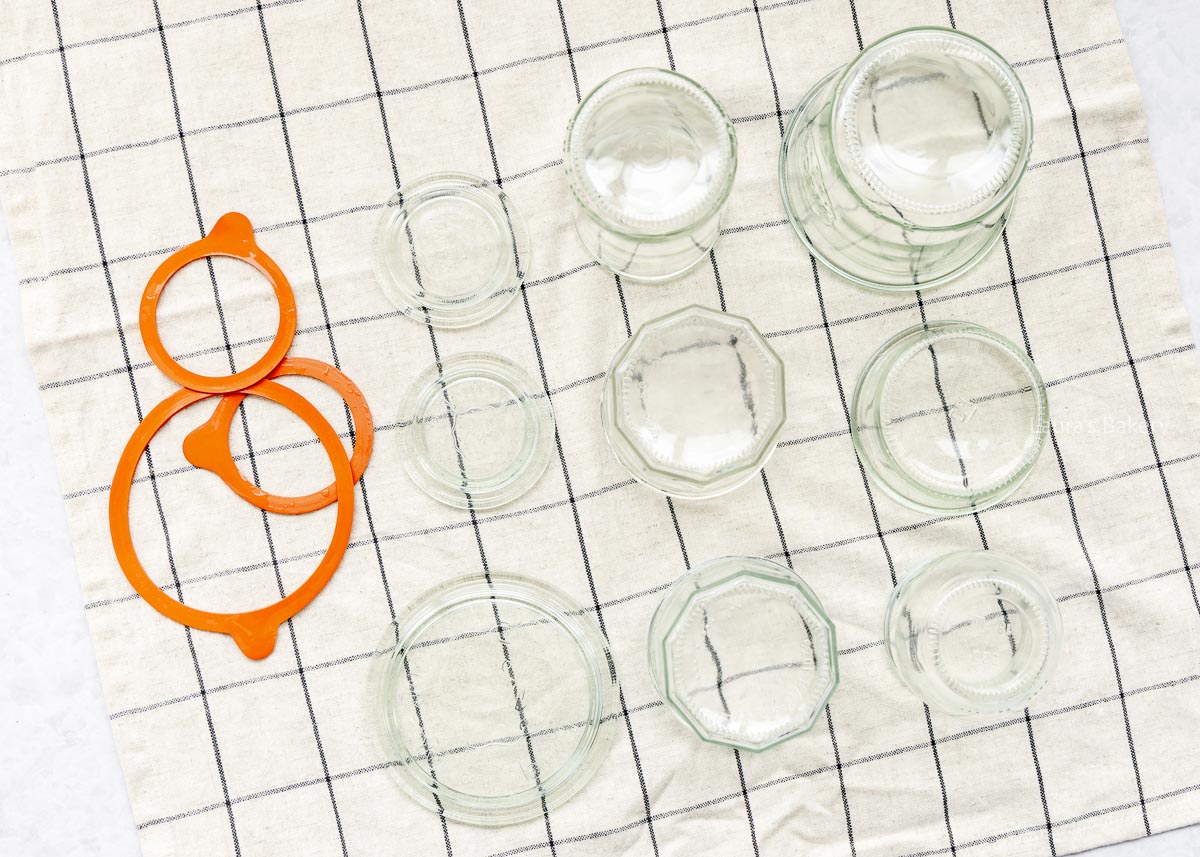
After sterilizing, fill your jars or bottles and clean the outside if needed. Let them cool completely, then add a label with the preparation date.
For everyday use, I often use a label maker. If I’m giving it as a gift, I like to go for a more vintage-style label, it just adds a cozy, personal touch.
Links in this article may be affiliate links. If you purchase something through such a link, I will receive a small commission, without you paying anything extra.

Welcome to Laura’s Bakery! You’ve come to the right place for the most delicious baked goods and appetizers. With my easy recipes for home bakers I will show you that baking is fun and delicious.
Have fun baking!