
Why is my pavlova turning brown?
This almost always happens when the oven temperature is too high. Many ovens are inaccurate, so I always recommend using an oven thermometer. For a convection oven I would set it to around 175°F (80°C).
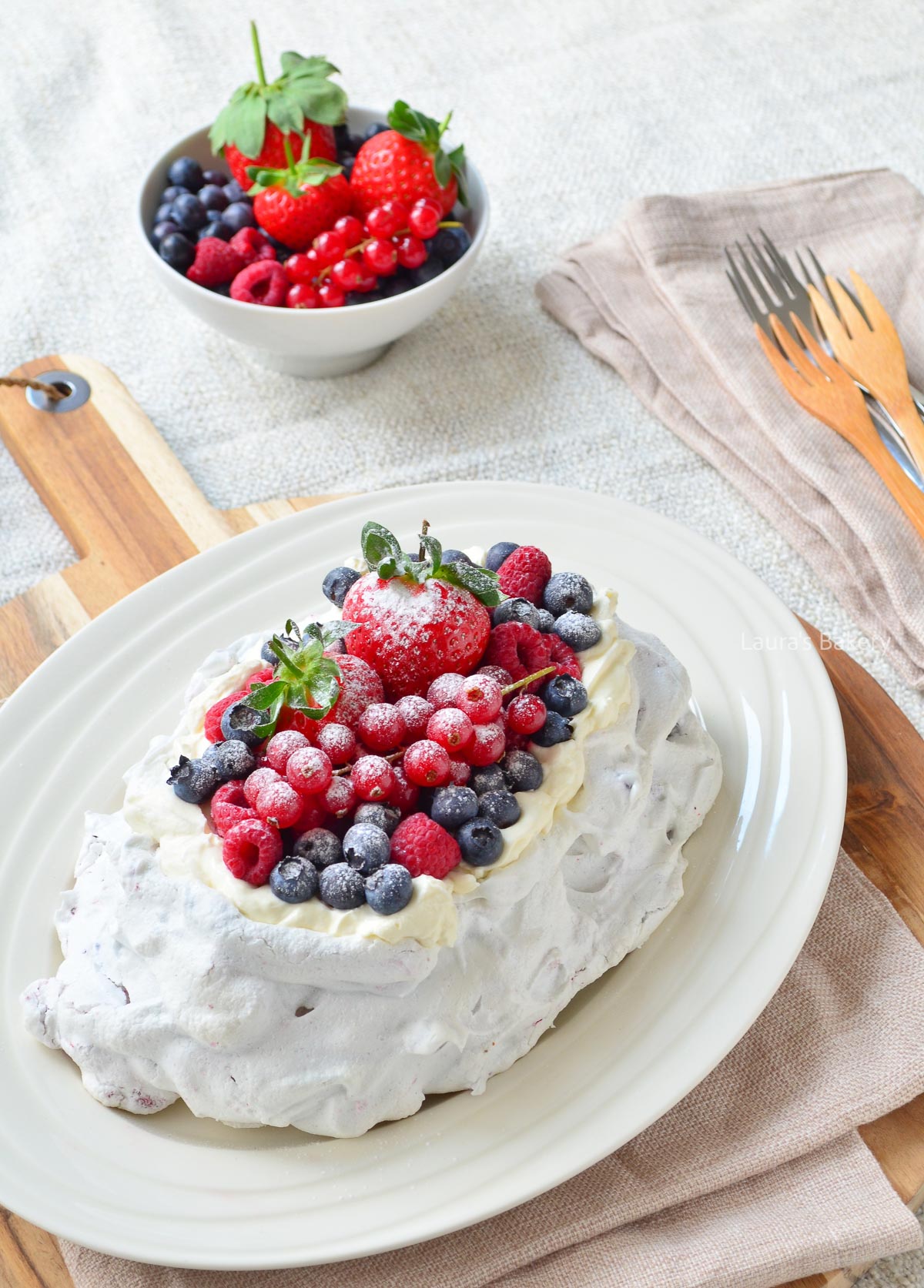
Today on the menu: the basic recipe for the perfect pavlova! In my opinion, pavlovas are ideal as a cake or dessert. They’re not complicated at all and with my tips and tricks you will make a delicious pavlova too!

This pavlova is crisp on the outside, soft and chewy on the inside, and impossibly light. It looks impressive, tastes fantastic, and works for both casual dinners and special occasions.
Plus, you can customize it with any cream, curd, or fresh fruit you love! It’s also easy to prepare in advance. Do I need to tell more to get you just as excited as I am?
For making a pavlova you really only need a few ingredients:
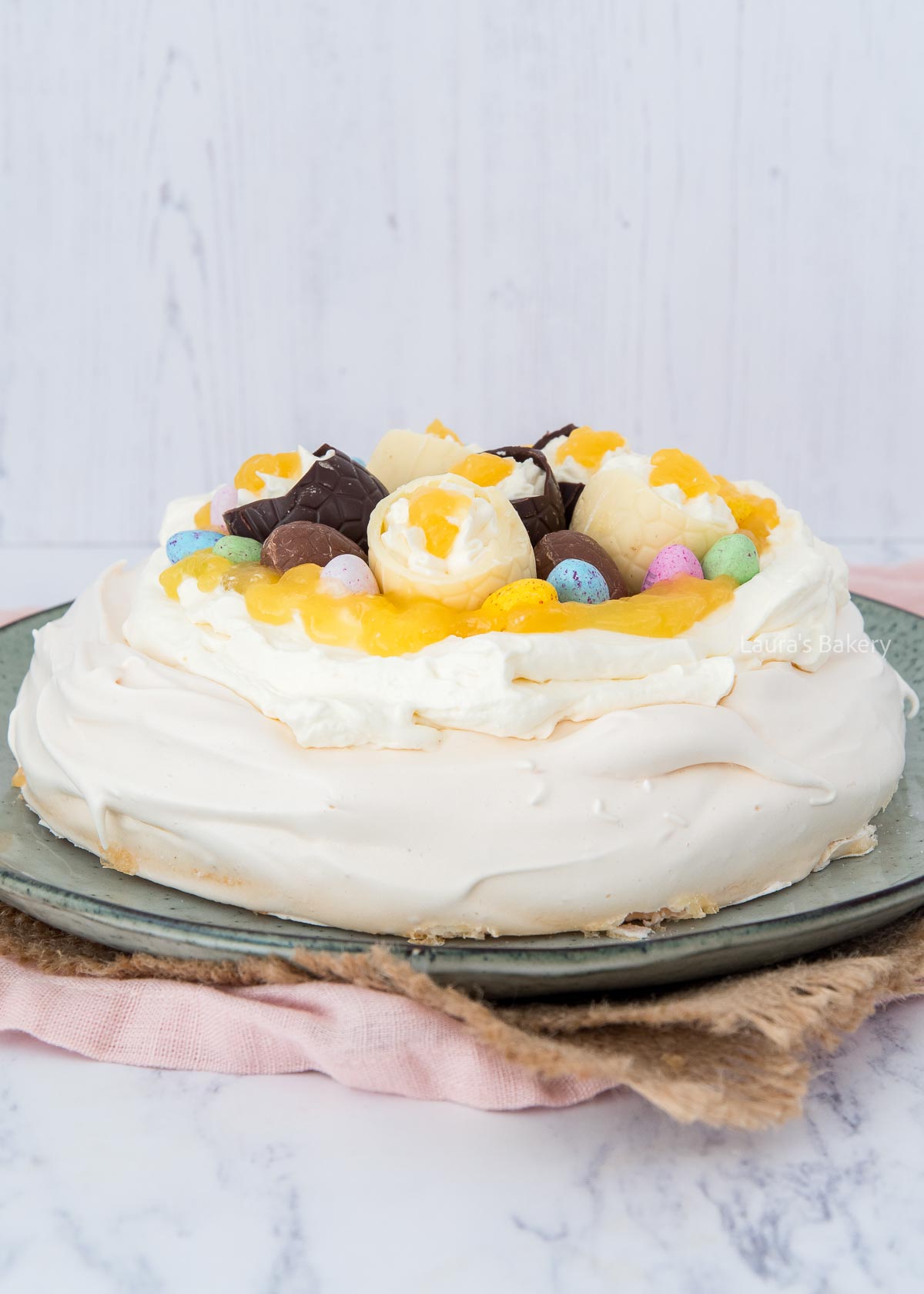
As promised making this easy pavlova recipe is no rocket science. You make the meringue mixture using the French method (so not the Italian meringue recipe).
Start to separate eggs and make sure that there is no egg yolk inside of the egg whites. If that is the case, the egg whites will not set properly.
For the perfect pavlova both the egg whites and the sugar play a big role. You start by whipping the egg whites with the sugar, lemon juice and cornstarch until stiff peaks appear. This is easiest when done in a stand mixer or food processor with a whisk attachment.
For a delicious pavlova the sugar is essential. Without the sugar the meringue will collapse and not hold it’s shape. So changing the sugar content is not a good idea without extensive testing.
Once the meringue is whipped you can make the pavlova. For this you use a piece of parchment paper on a baking sheet.
Shape the pavlova in a round circle and place inside the preheated oven. Since baking is done at a really low temperature (210˚F/100˚C) it does take a long time, around 2 to 2,5 hours.
But it is worth the wait! Once baked let it cool down completely inside the oven with the door slightly ajar. I like to place a wooden spoon to keep the door open just a tiny bit.
What officially sets pavlova apart from regular meringue are two ingredients: vinegar and cornstarch. These keep the inside pleasantly soft and chewy instead of fully crisp.
Not surprisingly, I also always make my meringue cookies with cornstarch, because I love that chewy texture. I personally prefer to use lemon juice instead of vinegar. The result is my go-to recipe for the perfect pavlova.
You can make this perfect pavlova recipe and serve it right away, or you can easily prepare it ahead of time.
Just make sure to store all components separately. Super handy when you’re hosting a party or dinner!
Unfilled pavlovas can be made 3-4 days in advance. Store them in an airtight container and make sure it is dry. I like to keep the pavlova in a closed oven, It’s a good dry place!
The filling can usually be prepared ahead too, depending on the ingredients. Once the pavlova is assembled, serve it as soon as possible. The moisture from the filling will make the meringue soften and melt.
Because of that moisture, pavlova doesn’t freeze well. It will get soft an melt a bit when thawing.
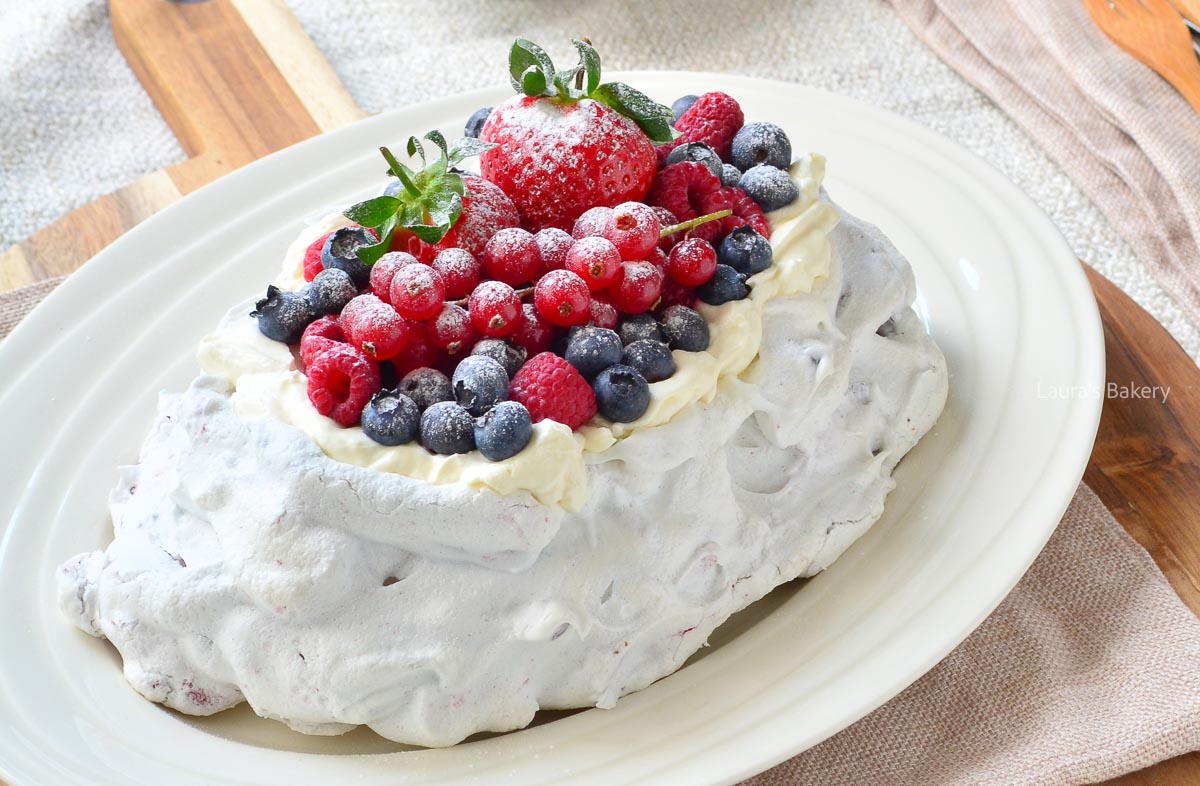
Here’s where the fun really starts: how are you going to fill and decorate your pavlova?
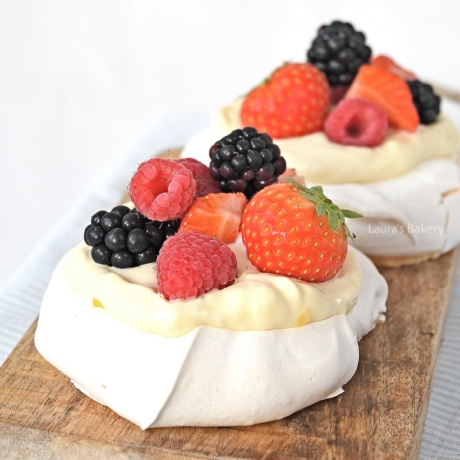
Most people love pavlova with fresh berries and a creamy filling. Think for example:
You can also flavor mascarpone cream with lemon curd or strawberry jam, or use them as extra toppings.
For decorations I usually stick to fruit, but cookies, chocolate, sprinkles, and even edible flowers all work beautifully.
You can even bake the meringue in the shape of a wreath like I did with this Christmas wreath pavlova.
This almost always happens when the oven temperature is too high. Many ovens are inaccurate, so I always recommend using an oven thermometer. For a convection oven I would set it to around 175°F (80°C).
Lower your oven to about 160°F (70°C) (conventional oven) and bake/dry the pavlova longer.
How long exactly depends on size and oven, start with an extra 30 minutes.
Personally, I don’t mind if pavlova isn’t pure white, as long as it doesn’t turn too brown.
Oh no! It probably looked done on the outside but wasn’t fully baked/dried inside. This can be caused by:
You removed it from the oven too soon and didn’t let it cool completely inside.
Most likely your bowl/tools weren’t grease-free or a tiny bit of egg yolk got into the whites.
You need to whip for quite a while before egg whites go from soft peaks to stiff peaks, a stand mixer helps a lot.
Don’t forget these tips for whipping egg whites.
Usually this means the pavlova wasn’t fully baked or the sugar didn’t fully dissolve during whipping.
It’s also important that the pavlova cools completely in the oven, this helps remove excess moisture.
Once cooled, transfer carefully to a serving plate.
Links in this article may be affiliate links. If you purchase something through such a link, I will receive a small commission, without you paying anything extra.

Welcome to Laura’s Bakery! You’ve come to the right place for the most delicious baked goods and appetizers. With my easy recipes for home bakers I will show you that baking is fun and delicious.
Have fun baking!