Is this best served warm?
This depends on your preference. I find it delicious served hot or cold. Either way, it’s great!
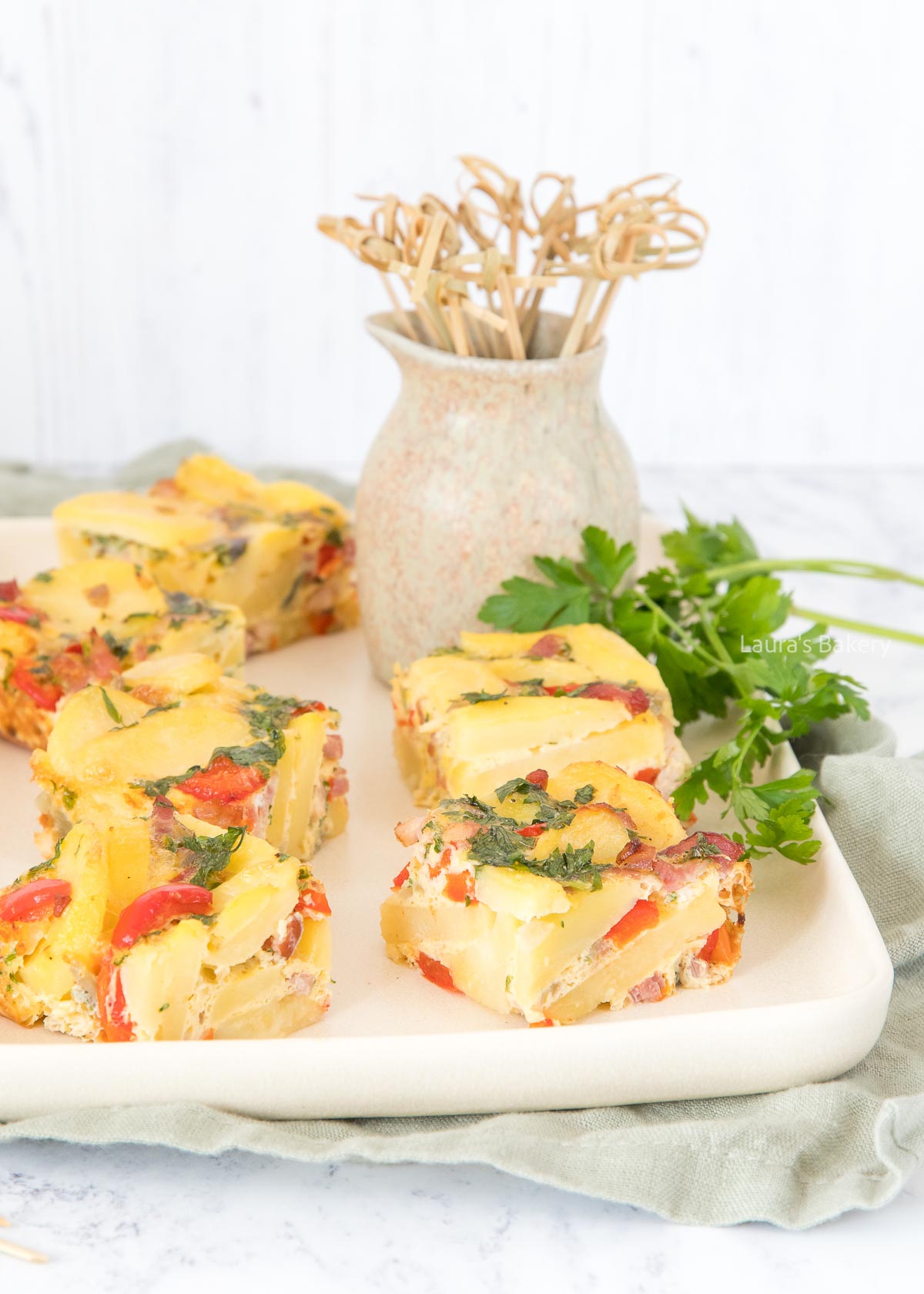
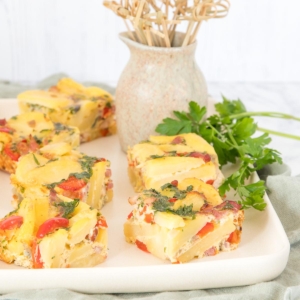
This Spanish tortilla with bacon is a hearty, flavor-packed twist on the classic, combining tender potatoes, savory bacon, and aromatic onion in a perfectly baked egg base. Ideal for any meal from breakfast to tapas night. Simple yet impressive.

You don’t need to book a flight to Spain to enjoy one of the world’s most delicious egg dishes. With this easy homemade Spanish tortilla with bacon, you can savor it for breakfast, lunch, dinner, or as part of a tapas spread any night of the week.
A traditional Spanish omelette, known as tortilla española or tortilla de patatas, is a thick, hearty dish made by gently cooking beaten eggs, potatoes, and onion in olive oil. In contrast to a thin, folded French omelette, the Spanish version is traditionally round from cooking in a skillet and several inches tall, usually cut into wedges.
Today, I’m shaking things up and making Spanish oven-baked potato tortilla with bacon. It also guarantees that the bottom won’t go a darker color, like I often experience when made in a nonstick pan.
Whip up an authentic Spanish tortilla that’s endlessly adaptable with simple pantry staples. Make sure to check out the recipe card below for full details:
Start by sautéing the onion and garlic until in olive oil until softened, then add the bacon and pepper to cook briefly.
Next, add the potato slices and cook for 3-4 minutes. You want the potato to be cooked through enough so that you aren’t left with any raw bits in the omelette.
Transfer this mixture to a baking dish and spread evenly.
Whisk the eggs with parsley, salt, and pepper in a mixing bowl. Pour this over the potato mixture in the baking dish.
No it’s just a matter of baking the assembled tortilla for 30 minutes at 400°F/200°C (conventional oven), or until the egg mixture is fully set.
COOKING TIP: Slice your potatoes between 1/8 – 1/4 inch (0.3-0.6 cm) thickness. This allows the potatoes to become tender enough while still enjoying a slight bite. A mandoline slicer is an ideal kitchen tool for ensuring uniform slices, but you can also slice the potatoes by hand.
Once completely cool, you can store this Spanish tortilla in the refrigerator, covered, for up to 2 days.
Absolutely! Cover the entire baking dish or wrap individual slices in plastic wrap and transfer to an airtight container or bag to freeze for up to 1-2 months. Thaw in the fridge and reheat to serve later.
Place leftovers in a baking dish, covered with foil, at 350°F/175°C for about 10-15 minutes, or until warmed through. Reheating in the microwave is another option, although it tenders to make the egg mixture rubbery if you aren’t careful.
If you love this Spanish tortilla, you’ll likely also enjoy these other baked egg dishes. All easily customized with savory fillings like bacon, cheese, or vegetables.
This depends on your preference. I find it delicious served hot or cold. Either way, it’s great!
A Spanish tortilla is traditionally cooked entirely on the stovetop and contains only potatoes, onions (sometimes), and eggs, while a frittata starts on the stovetop and is finished in the oven (or broiler) and can include a wide variety of vegetables, meats, cheese, and dairy like milk or cream.
Yes, tortilla española and tortilla de patatas are the same dish and the terms are often used interchangeably. They both refer to the classic Spanish omelette made primarily with eggs, potatoes, and sometimes onion. “Tortilla española” simply means “Spanish tortilla,” while “tortilla de patatas” means “potato tortilla.”
Absolutely! Dice the pre-cooked potato slices into smaller, uniform pieces to fit the cups. The baking time will reduce significantly to roughly 12-18 minutes at the same temperature of 400°F/200°C (conventional oven), or until the egg is set.
That would be a delicious option! Keep in mind that this recipe is for approximately 4-6 people, so simply multiple the recipe if you need more for a larger crowd.
The best potatoes for a Spanish tortilla are waxy potatoes or those with a low to medium starch content like Yukon Gold or red potatoes as they hold their shape during cooking and provide the signature creamy, tender texture .
Avoid starchy potatoes like Russets, which become too crumbly, and prone to soaking up excess oil.
While it won’t be traditional, you can experiment with all kinds of filling options, such as mushrooms, halved cherry tomatoes, spinach, diced ham, shredded sharp cheddar cheese, and much more.
Links in this article may be affiliate links. If you purchase something through such a link, I will receive a small commission, without you paying anything extra.

Welcome to Laura’s Bakery! You’ve come to the right place for the most delicious baked goods and appetizers. With my easy recipes for home bakers I will show you that baking is fun and delicious.
Have fun baking!